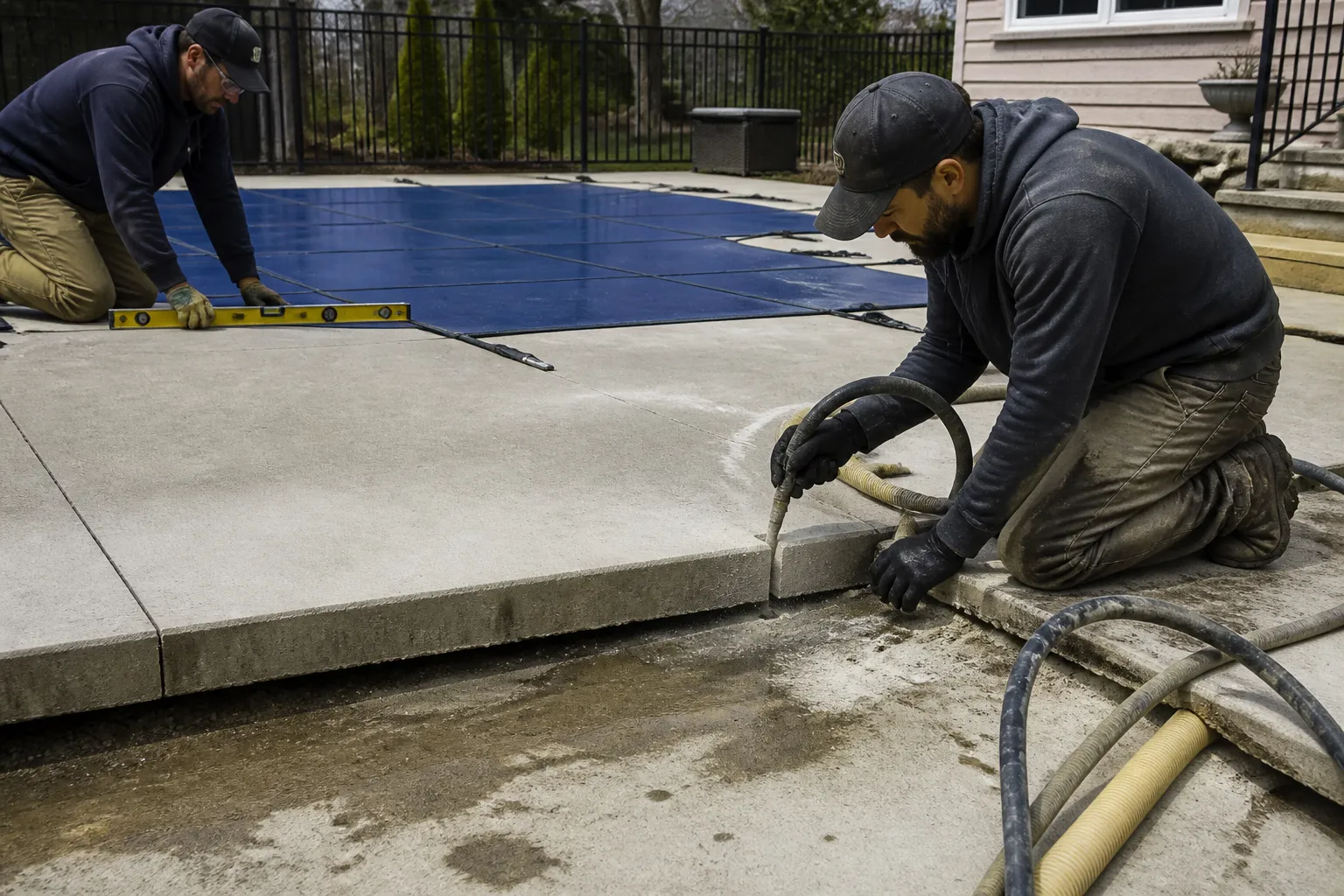
A sinking pool deck can turn a relaxing backyard into a place full of trip hazards, awkward edges, and standing water. If slabs have shifted, separated, or started to tilt toward the pool, the surface may need attention before the damage spreads.
Toronto Concrete Leveling helps property owners with pool deck leveling throughout Toronto, ON, using methods such as polyurethane foam injection, slab jacking, and concrete lifting to raise settled concrete without full replacement whenever the slab is a suitable candidate.
Pool deck settlement usually starts small. A single low corner, a thin crack, or a slight lip between slabs can be easy to ignore until the problem becomes more noticeable underfoot. Around a pool, those changes matter because people are often walking barefoot, carrying towels, or moving around wet surfaces.
Common signs your pool deck may need leveling include:
If you are noticing one or more of these issues at your Toronto property, the slab may have settled because of soil movement, voids beneath the concrete, or washout below the deck. The right repair starts with identifying the cause of the settlement, not just covering the symptom.
Pool deck leveling is designed to raise settled concrete back toward its original position and restore a smoother walking surface. Instead of tearing out sound slabs and hauling away usable concrete, we lift the affected sections from below.
Toronto Concrete Leveling may recommend one of a few methods depending on the slab condition, access, and settlement pattern. The goal is to stabilize the deck, improve safety, and avoid unnecessary disruption to the surrounding area.
This method uses expanding foam injected beneath the slab through small holes. The foam fills voids, supports the concrete, and helps lift the settled area. It is often chosen when a clean, controlled repair is the right fit for the slab and site conditions.
Slab jacking uses a material pumped beneath the concrete to fill empty spaces and raise the surface. It can be a practical option for certain pool deck sections that have dropped because the base beneath them lost support.
Concrete lifting is the broader repair process of restoring the slab elevation rather than replacing the entire deck. For many pool deck issues, this is the most direct path back to a safer surface.
Not every sunken pool deck should be treated the same way. Before recommending a repair, we look at how the slab has moved, whether the settlement is isolated or widespread, and whether the concrete is still a strong candidate for lifting.
We check the slab for cracking, scaling, and breakage that may affect the outcome. Some concrete can be lifted and reused; some sections may be too damaged for a lift to make sense.
A single low corner suggests a different repair approach than several panels settling across the deck. Understanding the pattern helps us choose the most useful method.
When the soil below has washed out or compressed, empty spaces can form under the slab. Filling those voids is part of restoring support.
We pay attention to edges, transitions, and areas where foot traffic is frequent, especially around pool entries and common walking paths.
Toronto Concrete Leveling focuses on practical solutions, so the recommendation is based on the actual condition of the deck rather than a one-size-fits-all approach.
Concrete settles when the support beneath it changes. Pool decks are especially sensitive because they often include wide flat slabs, open edges, and many adjoining sections. Once support is lost, one area can start to drop while nearby concrete remains at its original height.
Typical causes include:
Understanding the cause matters because lifting the slab without addressing the unsupported area would leave the same problem beneath the surface. That is why the repair process begins below the deck, not just above it.
A raised pool deck can change how the whole area feels and works. Instead of stepping over uneven joints or watching water collect in low spots, you get a smoother surface that is easier to walk on and easier to keep tidy.
Pool deck leveling can help with:
For many Toronto property owners, the appeal is simple: keep the concrete you already have whenever it can be restored instead of replacing more than necessary.
When you contact Toronto Concrete Leveling about pool deck leveling, we start by looking at the slab movement and the conditions around the deck. That lets us decide whether lifting is suitable and which repair method fits the situation.
We review the affected sections and identify where the concrete has dropped, shifted, or separated.
We explain the repair approach and what the lifting process is meant to correct.
Access points are created as needed, and the slab area is prepared for the chosen leveling method.
Material is introduced below the slab to fill voids and raise the concrete toward the desired level.
We check the surface, transitions, and visible result so you understand what was corrected.
Because every pool deck settles differently, the exact steps can vary. The key point is that the process is designed to restore support without unnecessary demolition when the concrete can still be saved.
Pool deck work should be planned with care because the area is often part of a finished outdoor space. A good repair respects the layout around the pool and focuses on the affected slabs without making the project larger than it needs to be.
You can expect clear communication about the repair approach, the scope of the lifting, and what the slab condition means for the outcome. If a section is too damaged to benefit from leveling, we will say so. If the concrete is a good candidate, we will explain why.
We also keep the focus on practical results. That means addressing the unevenness, the support beneath the slab, and the transitions that create hazards or make the deck harder to use.
Once a deck has been leveled, it helps to keep an eye on early movement so small changes do not become larger repairs later. You do not need a complicated maintenance routine. A few habits can make it easier to notice changes early.
If the deck starts changing again, catching it early can make the repair conversation simpler. Small movement is easier to assess than larger settlement that has been left alone for too long.
No. Some slabs are good candidates for leveling, while others are too broken or deteriorated to restore safely. We evaluate the concrete first so the recommendation matches the actual condition of the deck.
Leveling is aimed at correcting elevation problems, but the visible appearance depends on the slab condition before the repair. Cracks and wear that already exist may still be visible after the surface is lifted.
Signs such as hollow spots, repeated sinking, or widening gaps often point to lost support below the concrete. A direct assessment helps confirm whether voids or settlement are the main issue.
Often, yes. When multiple adjacent slabs have dropped, lifting can sometimes restore the surface more efficiently than removing and replacing everything. The layout and slab condition determine whether it makes sense.
That usually points to localized support loss. The repair can focus on the affected side while keeping the rest of the deck intact, as long as the slab condition supports that approach.
Small changes often become larger ones. On a pool deck, even a slight edge difference can be noticeable under bare feet and can signal that the slab beneath is continuing to move.
If your pool deck at a Toronto, ON property is settling, cracking, or creating uneven walking areas, Toronto Concrete Leveling can help you understand whether leveling is the right repair. We work with homeowners, property managers, businesses, and municipalities across Toronto and the Greater Toronto Area, always with a focus on honest recommendations and clear next steps.
Call +16477005472 to discuss your pool deck and learn whether concrete lifting, slab jacking, or polyurethane foam injection may be the right solution for your surface.
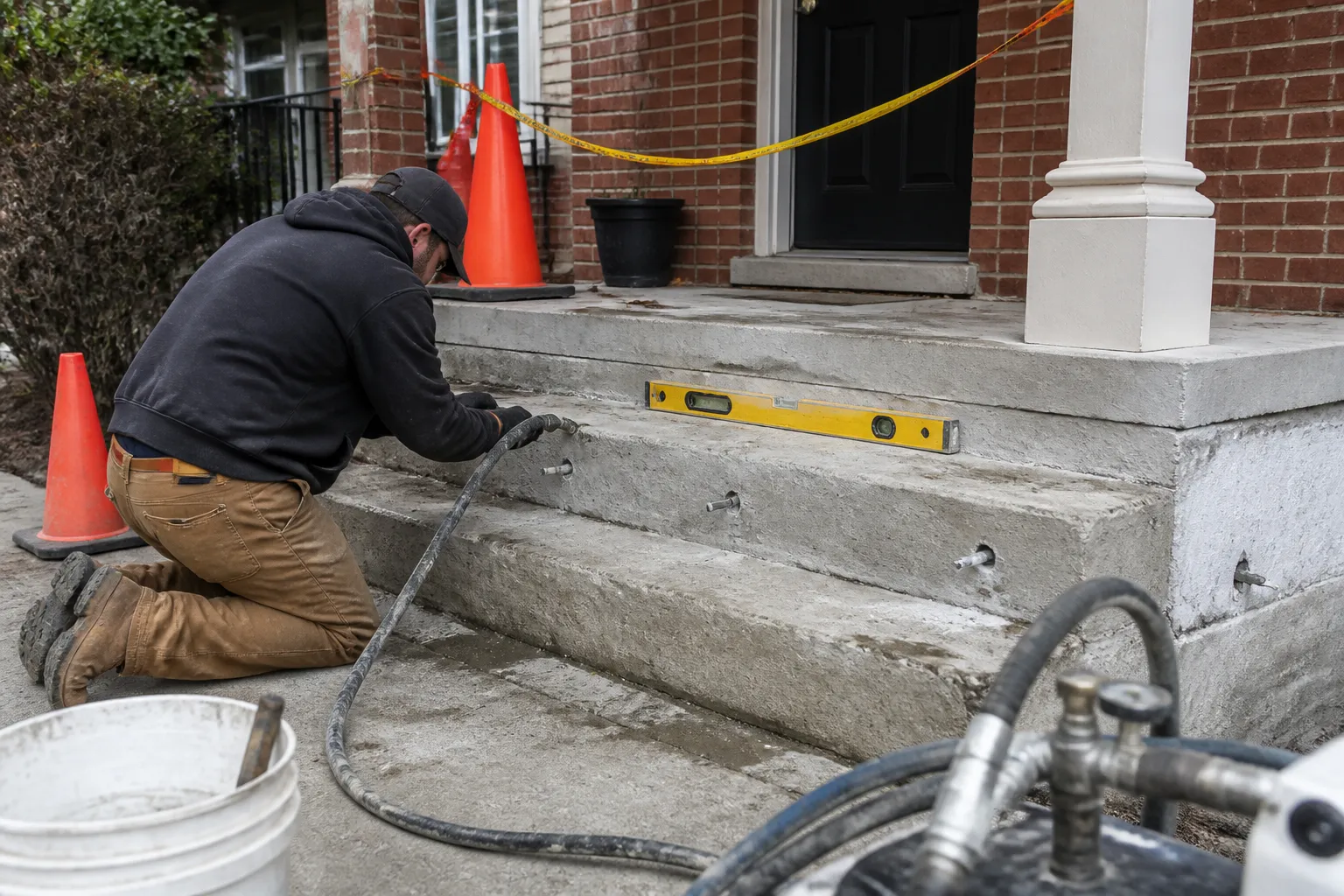
Start With a Site Review
Tell us about your settled driveway, uneven sidewalk, sunken patio, or garage floor, and we will help you understand whether leveling, lifting, or another repair path is the best fit.