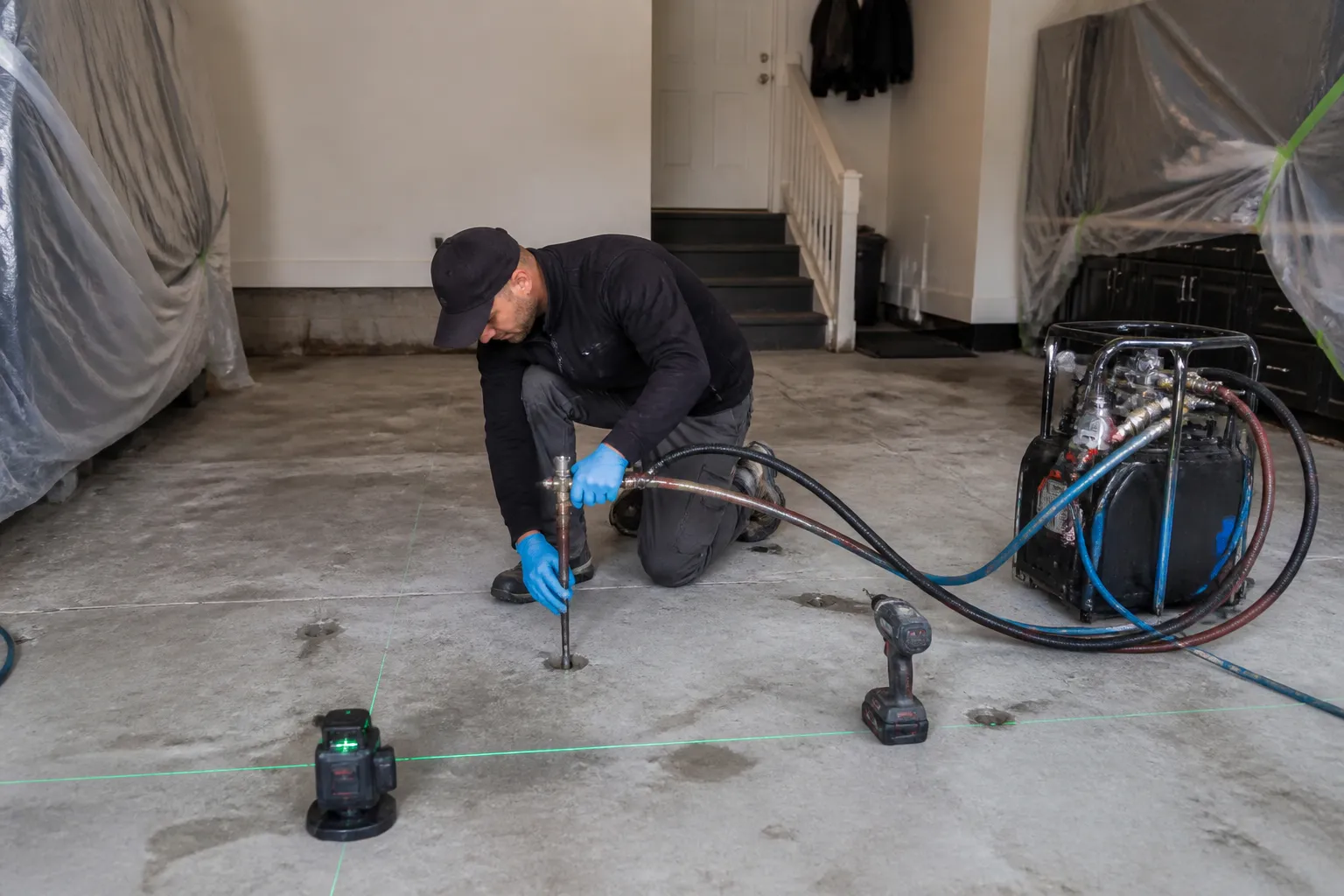
If your garage floor has started to dip, slope, or crack, you may notice the garage door catching, water collecting near one edge, or a lip forming where the slab meets the driveway. These changes can make daily use frustrating and can turn a simple walk into a trip hazard.
Toronto Concrete Leveling helps property owners across Toronto, ON restore settled garage floors with concrete lifting methods that are designed to raise the slab without full replacement. If the concrete is still structurally workable, we can assess the cause of the settlement and recommend a practical repair path that fits the condition of the floor.
A garage floor rarely sinks all at once. The movement usually starts small, then becomes more noticeable as the slab settles around one corner, along the perimeter, or near the opening. You may see one or more of these signs:
These symptoms matter because a garage floor should support regular vehicle weight and everyday foot traffic. When a slab settles unevenly, the surface becomes harder to use and the problem can keep progressing if the underlying voids or soil issues are left alone.
Garage floor leveling is a repair method that raises settled concrete back toward a more even position. Instead of tearing out the entire slab, we use targeted lifting methods that work beneath the concrete to fill gaps and restore support.
Polyurethane foam injection uses expanding material placed through small holes drilled into the slab. As the foam expands, it fills voids and helps lift the concrete with controlled pressure. This method is useful when the garage floor has dropped but remains a good candidate for restoration.
Slab jacking, including mudjacking and polyjacking, is used to support and raise settled sections of concrete. The right approach depends on the slab condition, the amount of settlement, and the access needed to reach the affected area. We review those details before recommending a repair.
Toronto Concrete Leveling focuses exclusively on concrete leveling, so we look at the slab itself, the soil below it, and the specific pattern of settlement rather than treating every floor the same way.
Some garage floor issues are easier to ignore at first, but the surface often gives clear warning signs before the condition worsens. Pay attention if you notice:
When these signs appear, a closer inspection is worthwhile. Early action can keep a manageable settlement from becoming a larger surface issue.
Not every garage floor needs replacement. If the slab is still sound enough to lift, leveling may restore the surface with less disruption and less material waste. Replacement is usually considered when the concrete is severely broken down, extensively deteriorated, or no longer suitable for lifting.
We help homeowners understand the difference by looking at the actual condition of the floor rather than assuming replacement is the only answer. That means checking the amount of settlement, the extent of cracking, and whether the slab still has enough integrity to respond to lifting.
Leveling is often a strong option when the floor has settled but remains largely intact. It can address a dropped edge, a sunken center section, or a slope that makes the garage awkward to use.
Replacement may be a better path when the slab is broken into many unstable sections, has serious structural breakdown, or has deteriorated beyond what lifting can reasonably correct. We explain that clearly so you can make an informed choice.
Garage floors settle for a few common reasons. The problem often begins below the surface, where soil movement or empty spaces reduce support under the slab.
Identifying the cause helps guide the repair method. A floor that has dropped because of voids may respond differently than a slab affected by broader soil settlement. That is why each project starts with a careful look at the pattern of movement.
Garage floor leveling should feel straightforward. Toronto Concrete Leveling keeps the process simple and focused on the actual slab conditions.
This approach keeps the project focused on the problem area rather than turning the entire garage into a demolition site. It also helps reduce the waste that comes with full replacement when the slab can still be restored.
Many homeowners reach out once the floor starts interfering with regular use. A sunken garage slab can make the space harder to park in, harder to walk through, and harder to keep clean and dry. Some people call after noticing the garage door clearance has changed. Others call after a trip hazard appears along the edge where the garage meets the driveway.
Toronto Concrete Leveling works with homeowners, property managers, commercial businesses, and municipalities throughout Toronto, ON and the surrounding service area, but garage floor leveling is especially common for property owners who want a practical repair without starting over from scratch. If the slab is a candidate for lifting, we aim to help you restore the floor with clear communication and a repair plan that makes sense.
If you are trying to decide whether your garage floor is a good candidate for leveling, it helps to note a few details before the inspection:
Sharing those details gives us a clearer picture of the settlement pattern and helps us focus on the right repair approach.
Yes, many garage floors can be lifted and supported without full replacement when the concrete is still suitable for restoration.
It can, especially when the hazard comes from a sunken edge or a height difference between the garage floor and the driveway.
It may help when pooling is caused by settlement rather than a separate drainage design issue. The cause needs to be checked first.
The slab condition, amount of cracking, and extent of settlement all matter. A careful assessment is the right starting point.
No. Some floors settle at the edge, some dip in the middle, and others drop in isolated sections. The repair approach depends on that pattern.
A company focused on leveling looks closely at the slab condition and the cause of settlement rather than treating replacement as the only answer. That can lead to a more practical repair plan.
If your garage floor is uneven, sunken, or causing a height change at the entrance, Toronto Concrete Leveling can help you understand the next step. Call +16477005472 or visit us at 452 Glebeholme Boulevard for a clear look at your options.
For garage floor leveling across Toronto, ON, we provide straightforward guidance, practical repair recommendations, and a focus on restoring concrete when restoration is the right solution.
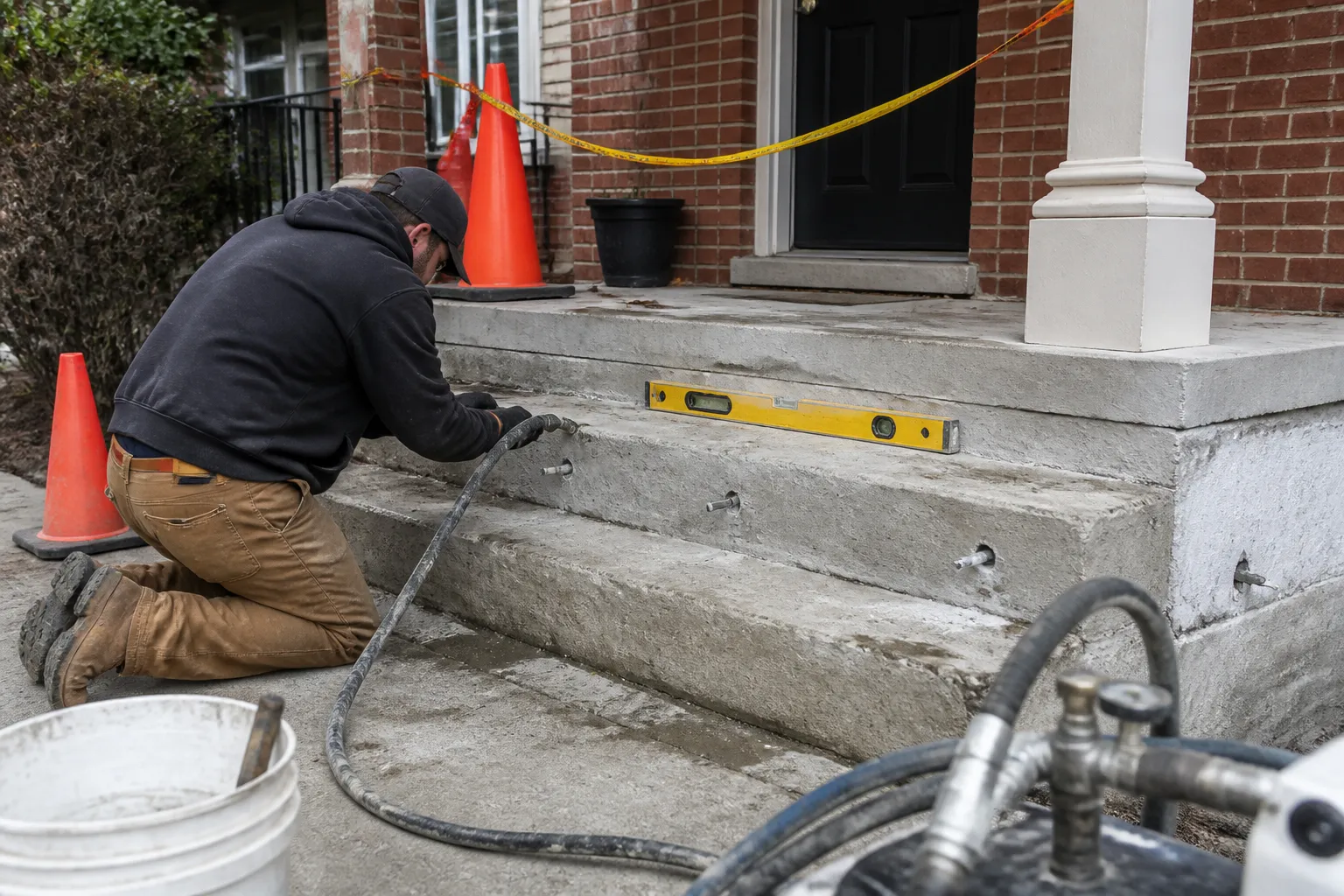
Start With a Site Review
Tell us about your settled driveway, uneven sidewalk, sunken patio, or garage floor, and we will help you understand whether leveling, lifting, or another repair path is the best fit.