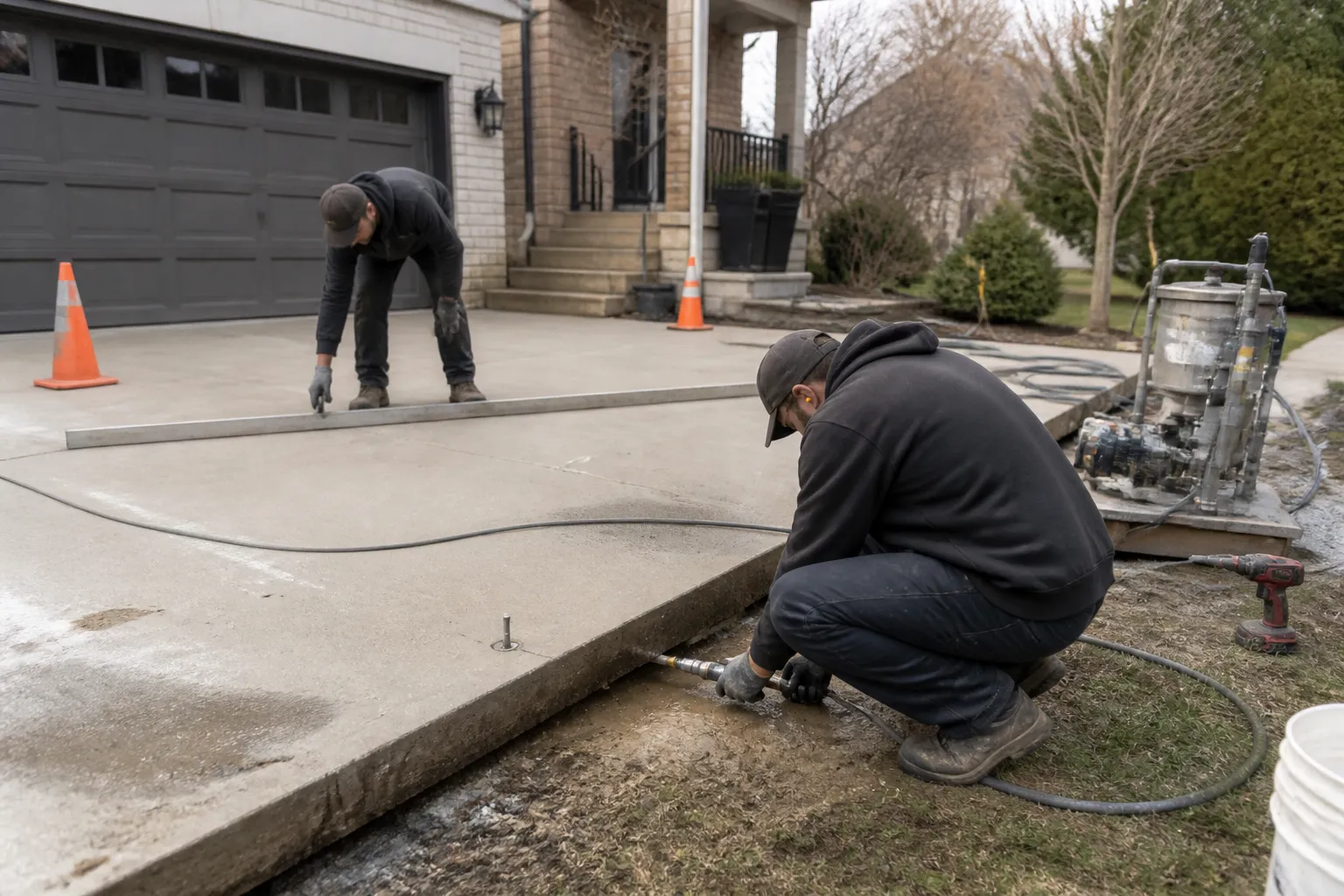
Concrete can appear sound from above while empty space develops beneath it. A hollow area, widening joint, settled edge, or new movement can point to a sub-slab void that has reduced support under an otherwise serviceable slab.
Toronto Concrete Leveling provides concrete void filling and slab stabilization for residential, commercial, and industrial concrete. The objective is to understand the support loss, fill the empty space where appropriate, and stabilize the slab. Raising the slab may be part of the work, but it is not always required.
The common sequence is straightforward: soil erosion or water washout removes fine material from the subgrade, loss of subgrade support creates a void, and the unsupported slab can settle or crack under its own weight and use. Rainfall, snowmelt, drainage problems, groundwater, and disturbed or backfilled soils can all contribute.
Not every void requires a visible elevation correction. If a concrete slab remains at an acceptable height but has lost support below it, injection may be performed primarily to fill empty space and provide support. This stabilization-focused work helps avoid leaving a serviceable slab bridging an unsupported area.
Polyurethane foam is injected through small ports beneath the slab. As it expands, the material can move into voids and restore support. Controlled expansion allows the work to be monitored closely. Where lifting is needed, the same process can be used for gradual slab raising; where it is not, the focus remains on fill and stabilization.
Soil conditions, void size, slab condition, drainage, and intended use all matter. A lightweight polyurethane approach may suit certain situations, while other slabs may be evaluated for a cementitious slurry method.
These symptoms should be assessed in context. They do not automatically prove a void, but they can point to support loss worth investigating.
Void filling can support driveway concrete leveling, patio concrete leveling, polyjacking and polyurethane concrete lifting, and warehouse and industrial concrete leveling. For broad concrete leveling information, visit our homepage.
No. Void filling can be performed mainly to restore support below concrete that has not moved enough to require elevation correction.
Soil erosion, water washout, settlement of fill, drainage paths, and disturbed soils are common contributors.
Polyurethane injection can be used to move into subsurface voids and provide support beneath suitable concrete slabs.
It addresses lost support below the slab. The source of water movement or drainage issue should also be identified where possible.
Yes. Unsupported concrete may bend or settle under load, which can contribute to cracks and elevation differences.
It can be relevant for commercial and industrial slabs where voids or support loss affect a serviceable concrete surface.
Contact Toronto Concrete Leveling to discuss suspected voids, unsupported slabs, and practical stabilization options in Toronto and the GTA.
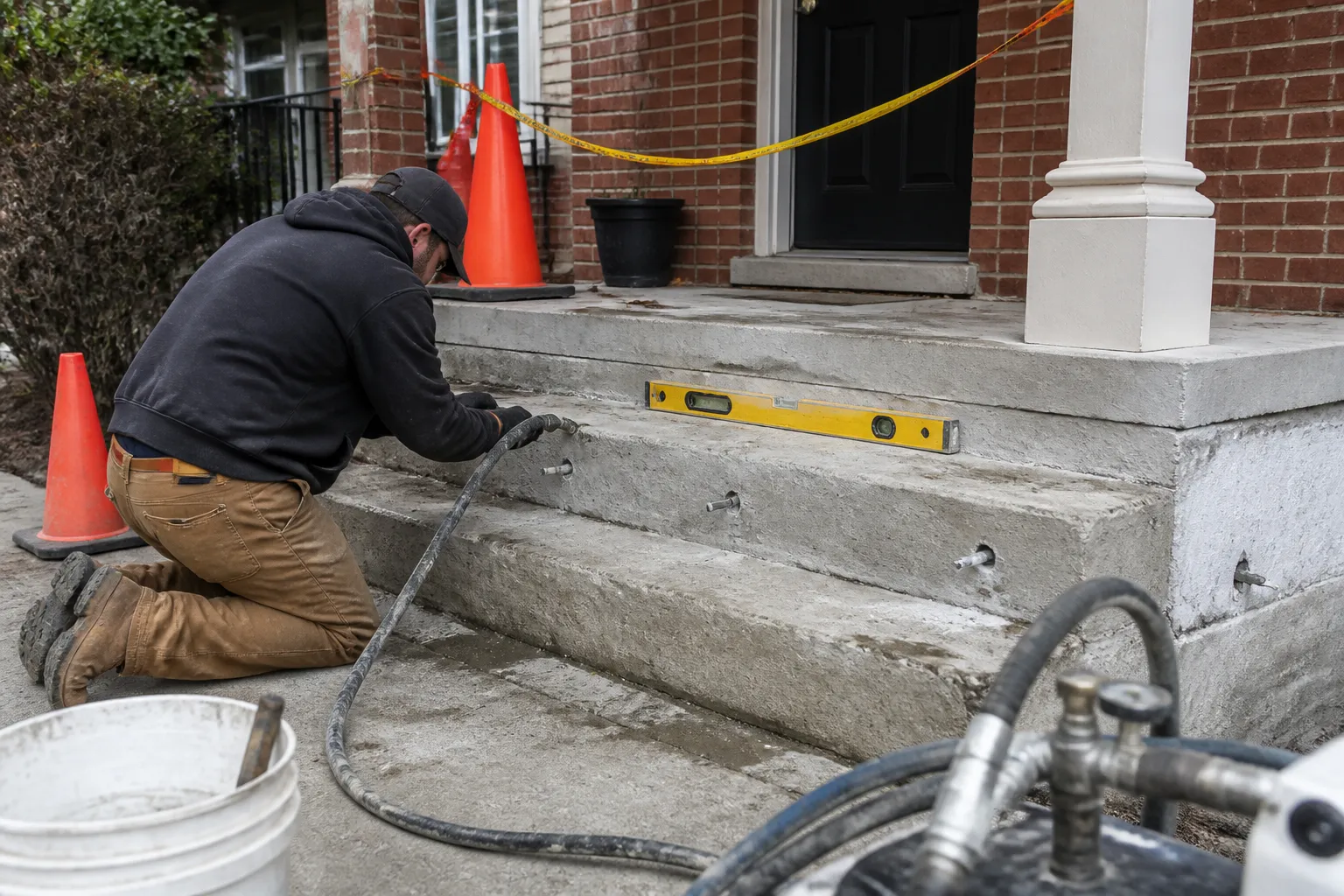
Start With a Site Review
Tell us about your settled driveway, uneven sidewalk, sunken patio, or garage floor, and we will help you understand whether leveling, lifting, or another repair path is the best fit.