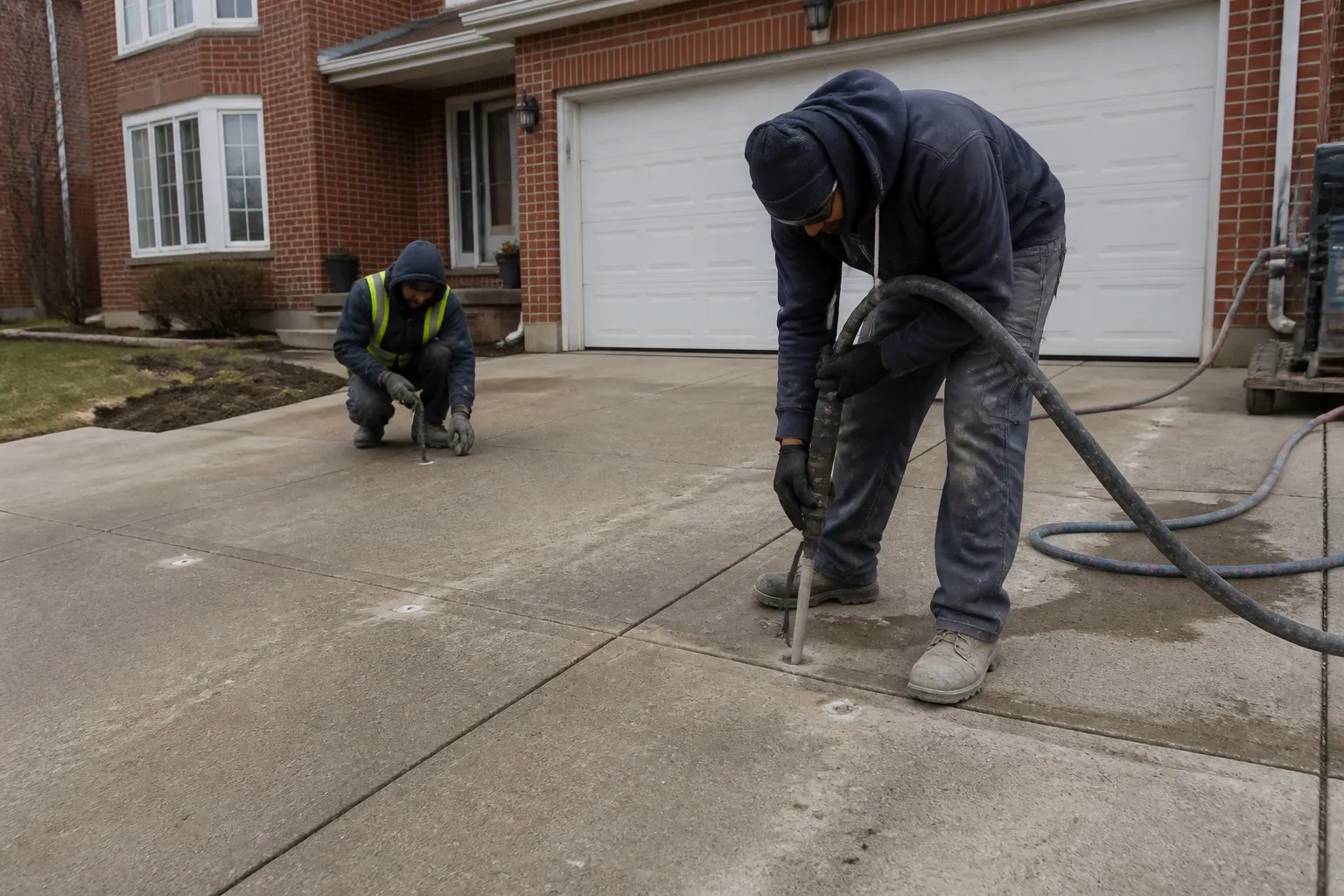
A driveway that has started to settle can turn a normal arrival home into a daily frustration. You may notice a tilt near the garage, a low spot that holds water, or a slab edge that catches tires and feet.
Toronto Concrete Leveling helps homeowners and property managers correct those changes with driveway leveling that lifts settled concrete instead of tearing it out. If your driveway is uneven, cracked from movement, or creating a trip hazard, we can assess the cause and explain the right repair path for your Toronto, ON property.
Driveway movement often starts small, then becomes easier to notice over time. The surface may still look usable, but the slope and slab height can tell a different story.
If any of these sound familiar, leveling may be a practical way to restore the driveway surface without replacing the whole slab.
Concrete driveways do not usually sink because the slab itself is weak. More often, the ground below changes and the concrete follows.
When we inspect a driveway, we look for the pattern of movement, not just the visible crack or low spot. That helps us recommend a repair that addresses the slab position and the support beneath it.
Toronto Concrete Leveling specializes exclusively in lifting settled concrete, so the repair method is chosen around the condition of the slab and the amount of movement present.
This method uses expanding foam to fill voids and raise the slab with controlled pressure. It is often useful when a driveway has settled unevenly but the concrete is still worth restoring.
Slab jacking involves lifting concrete by filling space beneath it and bringing the slab back toward its intended height. It can be a strong option for certain driveway conditions where support has been lost below the surface.
Mudjacking uses a cement-based material to lift supported slabs back into place. It remains a repair method for some driveway situations where the slab and base conditions fit the approach.
We explain the differences clearly so you can understand what each method does, how it affects the driveway, and which option makes sense for your surface.
Driveway leveling is meant to be straightforward. A careful assessment comes first, then the lift is planned around the actual movement of the concrete.
The goal is not to force a slab to do what it cannot. The goal is to restore usable concrete when leveling is the right solution.
Not every cracked driveway needs replacement. Many sunken slabs can be restored if the concrete is still structurally worth keeping and the problem is mainly settlement below the surface.
Leveling is often a good fit when:
Replacement may be the better path when the slabs are too deteriorated to lift, but that decision should come from an honest review of the driveway condition, not a guess based on appearance alone.
Driveways often settle in a few predictable places. These spots can affect day-to-day use and make the entire surface feel less stable.
The connection between the driveway and garage floor is a common place for settlement. A dropped slab here can create a noticeable lip and make entry less smooth for cars, carts, and foot traffic.
Outer edges may lose support first. When that happens, the slab can tilt, crack, or break away from the adjoining section.
Some driveways sink more in the middle, especially where the base below has compacted unevenly. This can leave a visible dip that collects water and changes how the driveway feels underfoot.
Waiting often makes a small settlement problem harder to live with. A minor drop can become a larger height difference, a wider crack, or a more obvious drainage issue.
Addressing driveway settlement earlier can help you:
For many properties, leveling is a practical way to extend the life of the existing driveway and keep the surface safer to use.
Toronto Concrete Leveling serves driveway projects across Toronto, ON and nearby communities throughout the Greater Toronto Area, including North York, Scarborough, Etobicoke, East York, Mississauga, Vaughan, Markham, Richmond Hill, Oakville, and Brampton.
Our focus stays on concrete leveling, lifting, and slab restoration for driveways, sidewalks, patios, garage floors, pool decks, and other settled concrete surfaces. If the driveway is the issue, we are ready to assess it and explain the options clearly.
Look for settled sections, uneven slab joints, pooled water, or a dropped garage transition. A review of the concrete and the movement pattern will show whether leveling is a sound option.
Leveling addresses the height difference and support loss beneath the slab. Some cracks remain visible, but lifting can reduce stress on the driveway and improve the surface alignment.
Yes. Many driveway projects involve just one sunken slab or a single low area. A targeted lift can restore the affected section without replacing the full driveway.
It can fill voids and lift concrete with controlled placement beneath the slab. That makes it a practical choice for some driveway settlement conditions.
Yes. Garage transitions are a common repair area, especially where the driveway has dropped and left a lip at the entry point.
It helps to know where you first noticed the settlement, whether water pools on the slab, and whether the problem has changed over time. Those details can guide the assessment.
If your driveway has settled, sunk, or become uneven, Toronto Concrete Leveling can help you understand what is happening and whether leveling is the right repair. We focus on practical answers, clear communication, and concrete restoration that makes sense for the condition of the slab.
Call +16477005472 to discuss your driveway leveling needs at 452 Glebeholme Boulevard, Toronto, ON. We are available Monday through Friday, 7:00 AM to 5:00 PM.
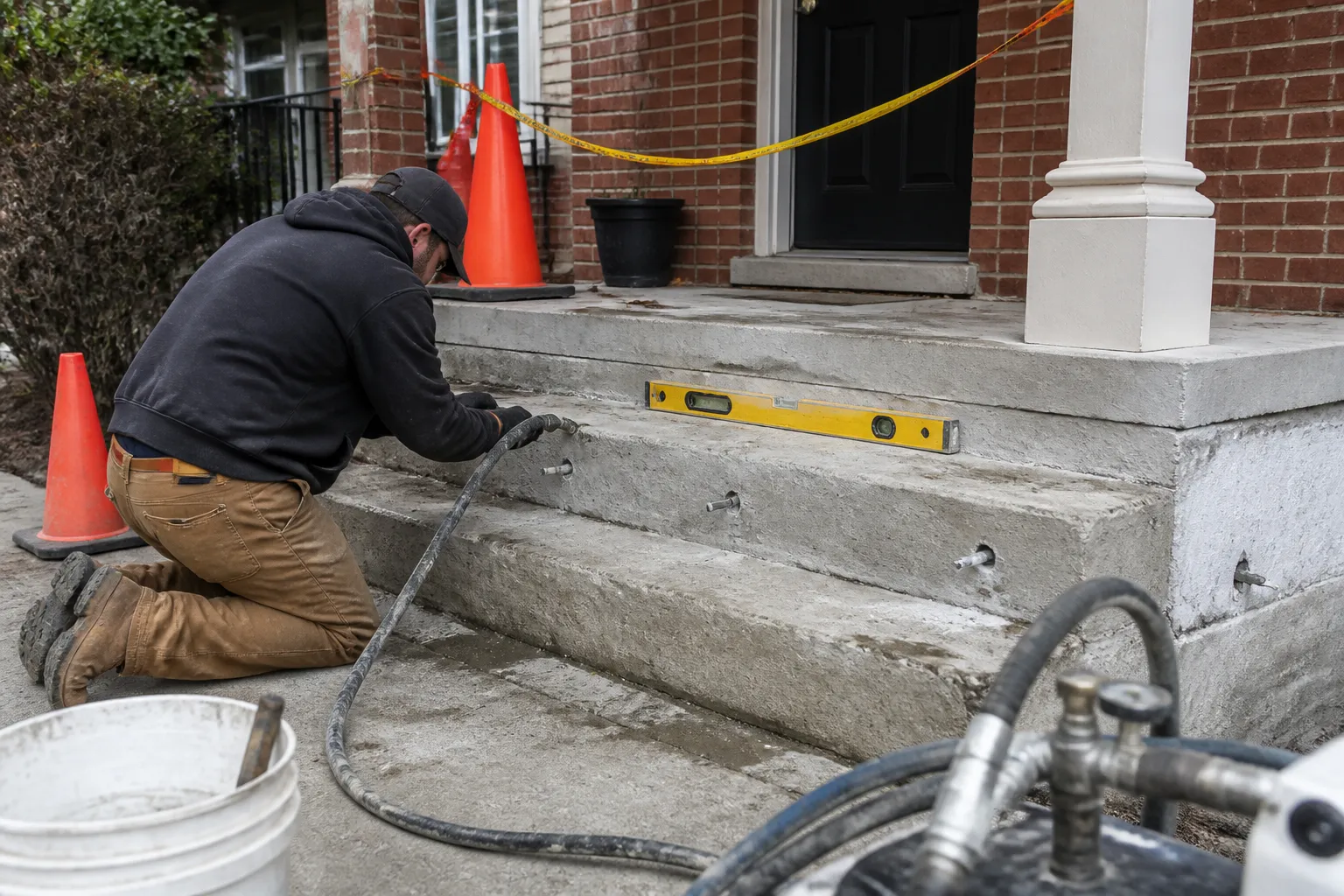
Start With a Site Review
Tell us about your settled driveway, uneven sidewalk, sunken patio, or garage floor, and we will help you understand whether leveling, lifting, or another repair path is the best fit.