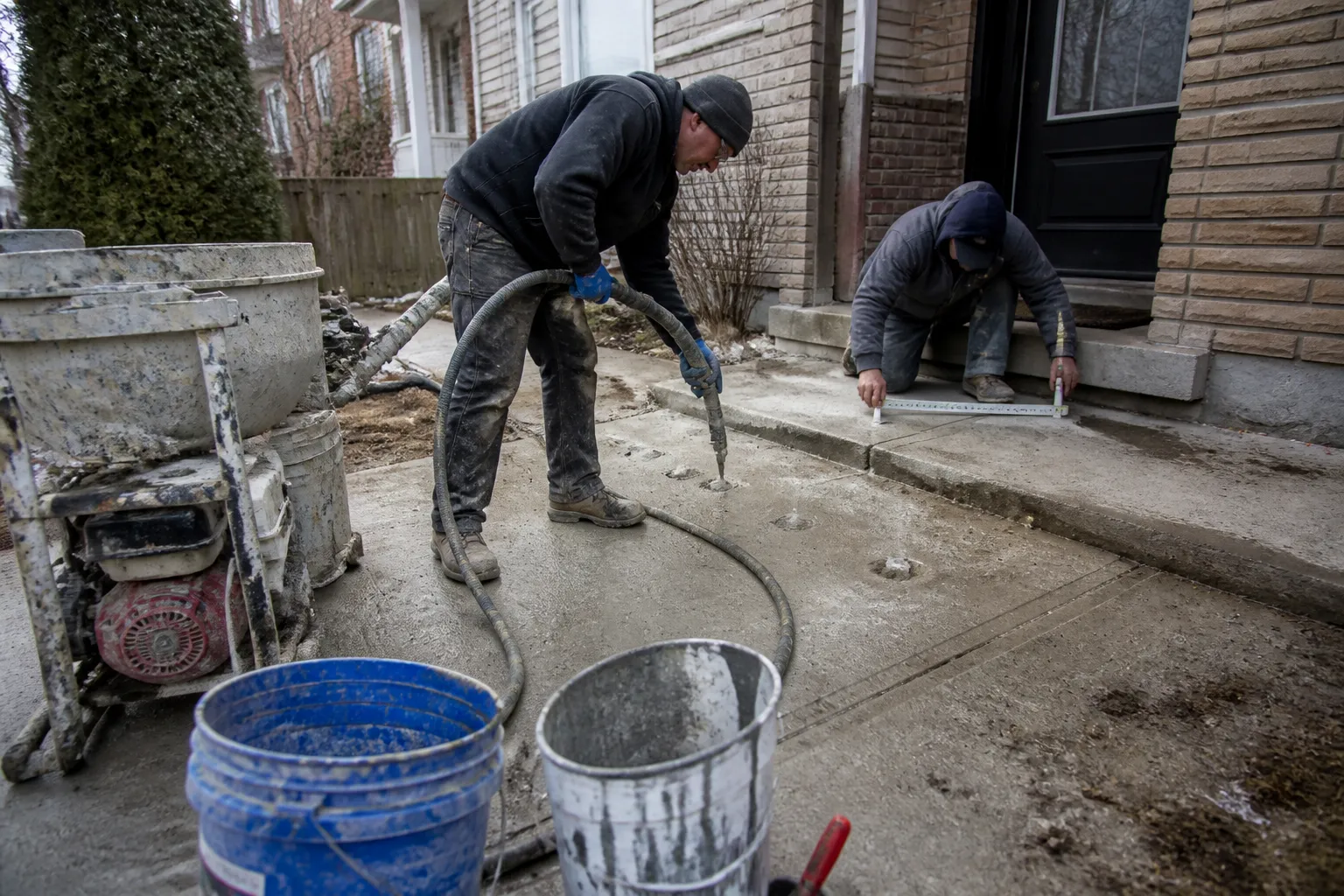
Mudjacking and slab jacking are closely related names for a concrete lifting approach that uses a pumped cementitious slurry beneath a settled slab. It can be a practical option for serviceable driveways, sidewalks, patios, steps, garage slabs, and other concrete that has dropped because support below it changed.
Toronto Concrete Leveling assesses the slab, injection access, under-slab voids, soil conditions, and required elevation before recommending a lifting method. The goal is to raise and stabilize suitable concrete, not to force a repair where the slab is too deteriorated.
The terms are often used interchangeably. Small injection holes are drilled through concrete, then a cementitious slurry or grout is pumped under the slab. As material fills voids and develops support, the slab can be raised gradually toward the required position.
Slab-on-grade concrete can settle when compacted fill changes, soil erodes, water causes washout, or voids develop below the concrete. The visible symptom may be a raised joint, a trip hazard, pooling water, or a dropped transition. The support loss below the slab is the issue the process addresses.
We review slab condition, joints, cracking, drainage, and surrounding elevations.
Injection holes are positioned to reach the affected under-slab areas.
Cementitious slurry is introduced to fill voids and provide lifting pressure.
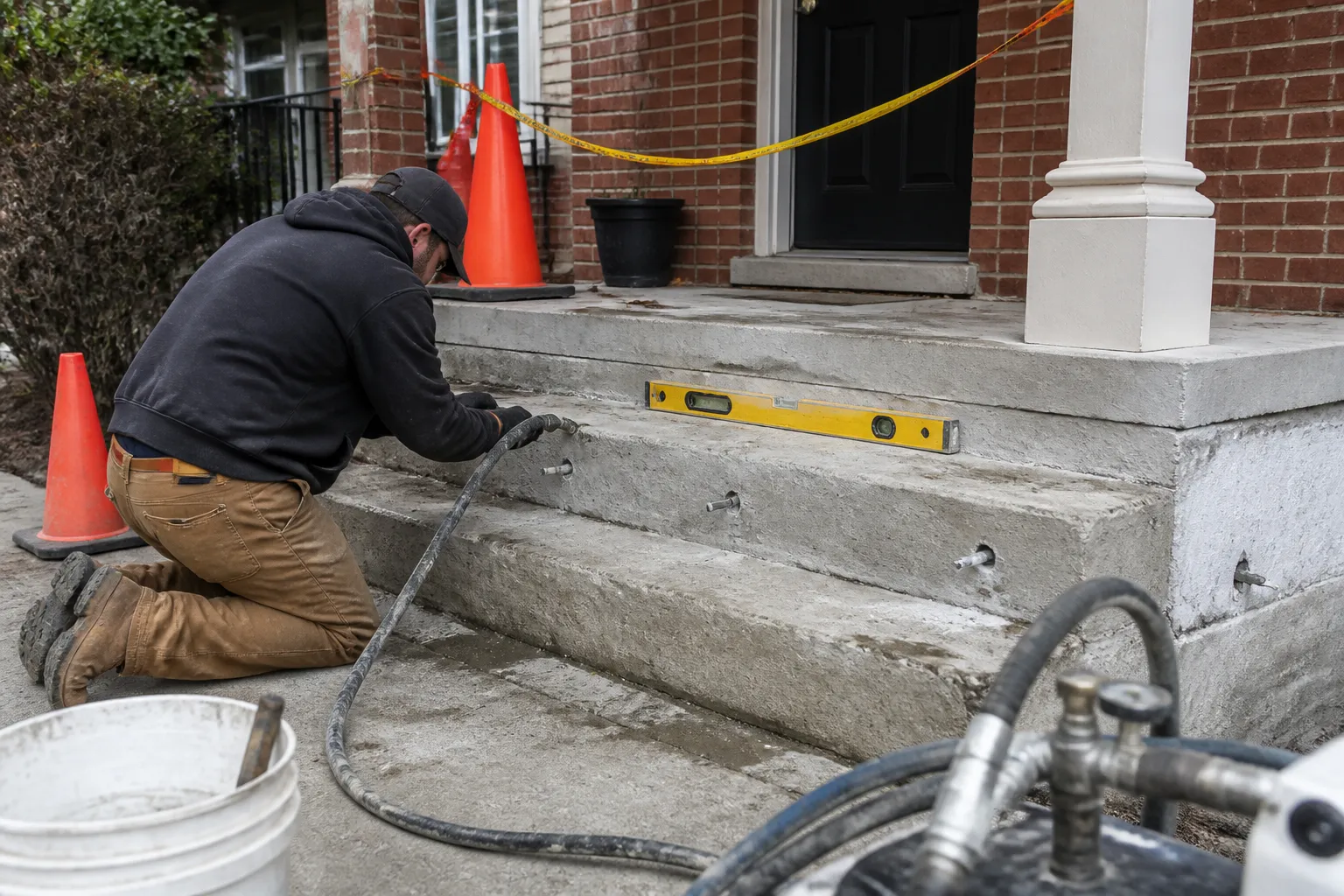
Elevation is observed during the lift to improve transitions without overcorrection.
Suitable concrete is generally intact enough to be lifted and stabilized. The correct method depends on slab condition, amount of settlement, access, soil and void conditions, and nearby structures. Polyurethane may be a better fit in some situations, while replacement may be appropriate for concrete that is no longer serviceable.
See polyjacking and polyurethane concrete lifting, concrete void filling and slab stabilization, and our homepage for broader concrete leveling information.
They are commonly used to describe lifting concrete by pumping a grout-like cementitious material below the slab.
They provide access for placing slurry below the concrete and reaching under-slab voids.
Yes. The material can restore support in empty areas and create controlled lifting pressure for suitable slabs.
Soil settlement, erosion, washout, drainage movement, and disturbed soils are common causes.
It addresses support and elevation. Existing cracks can remain visible after the slab is raised.
No. Concrete condition, support loss, site access, and the repair objective determine suitability.
Contact Toronto Concrete Leveling to discuss mudjacking and slab jacking for suitable settled concrete in Toronto and the GTA.
Start With a Site Review
Tell us about your settled driveway, uneven sidewalk, sunken patio, or garage floor, and we will help you understand whether leveling, lifting, or another repair path is the best fit.